Thursday, May 17, 2012

A Different View of Stratford


What is your favorite photo of Stratford Hall? 

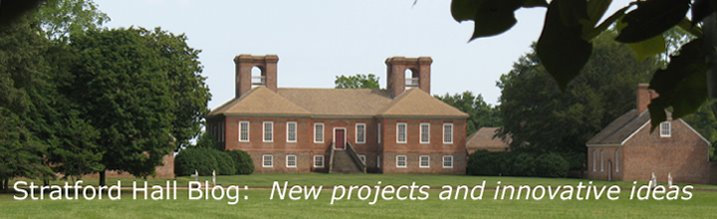
This question came up yesterday when a great photo of the Octagon showed up on the Virginia.org Facebook page. Certainly when you think of Stratford Hall, an image of the Great House comes to mind. No matter the season, the Great House always makes for a beautiful photo, as evidenced on our current Facebook page banner.

Most of the photos you see of the Great House, however, are looking at it straight on from the south side of the house. These photos, while certainly iconic, give us a one dimensional view of the house. Photos taken from a different view, not usually seen, give us a much wider perspective. Like an aerial photo, or perhaps one of my favorites, taken from the top of the chimney towers.

This photo is in our exhibit "On the Way to Stratford."
Historical photos of the Great House can also be very interesting.  In a temporary exhibit currently in our Visitor Center, titled “On the Way to Stratford,” you can see photos of people visiting the Great House dating back to 1897. These photos also give us an additional perspective of how the Great House has changed over time. There is even a place left empty in the exhibit for your photo, so on your next visit to Stratford, be sure to take a photo of you at Stratford Hall and send us a copy.

A view from a nature trail looking out on the mill pond.
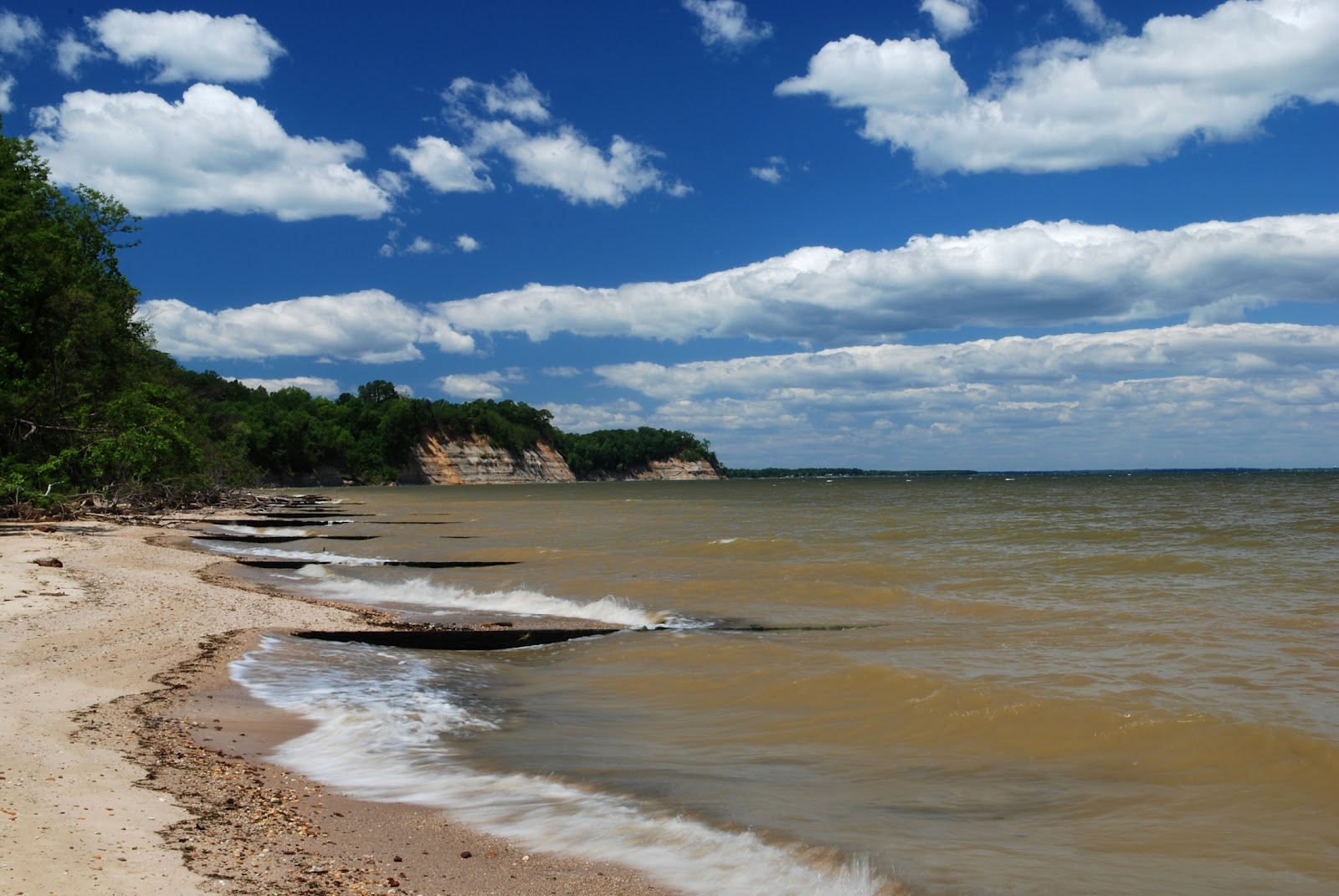
But with 1,900 acres, your favorite Stratford photo may not even be of the Great House. Photos of the Miocene era cliffs, farm animals, the beach, gristmill and mill pond, or the many outbuildings like the Octagon may have been the focus of your favorite photo here at Stratford.

So let us know what your favorite image is, Great House or another scene?  And be sure to post your photos of Stratford on our and Virginia.org Facebook pages.


Monday, May 7, 2012

Dining with Fresh Farm Produce

In the early 1930’s Stratford Hall began serving meals to the public on the ground floor of the Great House.  In May 1937 a new Plantation Dining Room was opened adjacent to the Astor Guest House.  Tragically, that structure survived less than a decade and was destroyed by fire in 1944.  The present dining room was completed in 1951, and the porch overlooking the wooded ravine was added in 1957.  It was enlarged 8 years later to its current size.
Stratford Hall Dining Room has recently added fresh organic produce to the Dining Room menu and it's produced locally on an organic farm. Along with fresh produce, many of the old favorites are back by popular demand (crab cakes, ham biscuits and the ham and crabcake platter). We look forward to a very productive year!

Thursday, May 3, 2012

Dispatch from the Gate House


In my capacity as Gatekeeper of Stratford Hall, my duties are to help control/monitor access to the property and to direct our guest, visitors, and contractors to their destinations. The Gatekeeper is also the first person to meet and welcome all visitors.  We create the all-important first impression.

For the most part, this is an enjoyable position. I am afforded the opportunity of meeting many very interesting people from locations far and wide. Not only do I have the gratification of assisting our guest in accomplishing the intended purpose of their visit, I also learn many fascinating things from them.

Often times people ask me if the job gets monotonous, out there away from the other buildings and with no one to talk to. My answer is NO! Every day is different. The visitors to Stratford are from all walks of life, ages, and nationalities...each with a different motivation for their visit. 

Perhaps the role I enjoy the most  is answering the numerous questions our valued guests ask. I will never forget one of my earlier experiences in this regard. In the early spring, beautiful fresh blossoms and flowers welcome visitors to Stratford as they approach the front gate. On one occasion, a rather energetic senior citizen inquired of me the name of one of these blossoms. I told her: “ I do not know, but you are about the fourth person to ask.”  She then said: “Well did it ever occur to you to find out?”

This was a good lesson for me.  I did find out that they were Mountain Laurels. From that day on, whenever I am asked a question, I do find the answer.

What is the most frequent question I hear? Well, besides being home to about 40 head of Red Devon Cattle and three horses, Stratford also has several goats.  The majority are very content in the confines of their pen... except one. We affectionately call her Izzie. She is a smaller goat who has a way of crawling beneath the fence in order to graze anywhere she pleases. Izzie always goes home when she is ready, but not before several people stop by and say: “Sir, do you know your goat is loose?”

I am tempted to have a t-shirt made up that reads: "Yes, I know the goat is loose.”

- Larry, Gatekeeper

Thursday, April 26, 2012

We're squirrely at Stratford!


Many visitors that come into the gift shop often wonder why we have squirrel items for sale. The squirrel sitting on a horizontal branch, cracking a nut, is the main element of the Lee family crest, as described in Burke's General Armory, registry of all English armorial bearings, from earliest times, listed at the College of Heralds. Underneath the Lee family crest is the Latin motto: Non Incautus Futuri. This translates to "not unmindful of the future." Squirrels are in a constant state of preparation, often seen running around Stratford collecting food for the winter.

The squirrel motif has been used on many items as a reminder of a time when a family's crest was applied to objects to denote ownership. As you can see from these images, we have the squirrel on a variety of different items for your gift giving (or a fun piece for your home!). Please e-mail Janet Branson if you have any questions about any of our products.

Stop by Stratford Hall to check out all our store products or visit us on our online store.

Thursday, April 19, 2012

The Stratford Cliffs: Layer cakes of time

Towering over 100 feet about the Potomac River are the famous cliffs of Stratford Hall. Within the deposit that make up the cliffs are the evidence of animals and plants that lived here long before the first hunter walked the shores. For thousands of years most of these remains went unnoticed.

It would not be until the mid 19th century that geologists began to piece together information that would lead to geological principles. Of these principles, the most significant is called superpositioning. This is a geological term applied to the observation that the oldest deposits are at the bottom the youngest are found at the top in a layer cake of time. The Stratford cliffs make up a unique layer cake and are part of the geographic region known as the Virginia Coastal Plain. The Virginia Coastal Plain is part of the much larger Atlantic Coastal Plain.

The specific layers at Stratford Hall are known to paleontologists and geologists as the Miocene Chesapeake Group Formations or Calvert Group. At Stratford Hall, these sediments span a time period from about 16 million years to the present day.

The sediment and silts, which formed the cliffs, are the result of millions of years of erosion and ocean sediment accumulation.
These sediments were deposited in a prehistoric bay known as the Salisbury Embayment. The Salisbury Embayment was an arm of the Atlantic Ocean which covered what is now Delaware, southern and eastern Maryland, the Virginia Peninsula, and parts of southern New Jersey during Tertiary times (about 65 million to 5 million years ago). Sea level throughout most of this period stood several hundred feet higher than at present and deposition of sediments draining off the continent possibly caused the underlying rocks to sink down, creating the embayment. The shore of the embayment lay inland at the present-day fall line in the region.

This bay was a shallow-shelf open marine setting and lagoon environment. Vertebrate assemblages such as rays, sharks,and ocean going crocodiles frequented the bay for food sources. Diverse invertebrate groups colonized the shallow and near shore environments.

Examples of teeth from an extinct sharks
When sea levels fell as the Pleistocene ice ages took hold, the thousands of feet of sediment layers in the Salisbury Embayment were exposed as the Coastal Plain terrains of Delaware, Maryland and eastern Virginia.

The various layers of the Calvert group are seen as bands of various colors rising from the river shoreline. Each color of sediment seen indicates a unique variety of sediments resulting from recurring pulses of marine advances and retreats over the millennia. These pulses were the accumulating deposits of silts, clays, and sands that sealed the remains of the animals and plants. Each of the layers holds a unique groups of fossils.

At Stratford Hall, the oldest sediments are visible at the water line. This is the Calvert formation (16 million years old). The next deposits up about 40 feet are the Choptank formation. The St. Mary’s formation rises above the Choptank. Rising above the St. Mary’s for about another 20 feet, is the Eastover formation of late Miocene age (5 million years old). Above the Eastover is the Yorktown formation of early Pliocene time. (1-3 million years old) The last layers, closest to the top of the cliffs, is the Pleistocene or ice age deposits (1.5 to 12,000 years old). At the very top is what geologists refer to as Holocene deposits. This is the geological epoch which began at the end of the Pleistocene (around 12,000 years ago and continues to the present).

It is not permitted to dig into the cliffs. The dangers are real. The unstable nature of the sediments results in frequent falling sections of cliff, and smaller avalanches are constantly occurring. Beach collecting is permitted in designated areas only.
Wednesday, April 11, 2012

Still Exciting

Museums often share parts of their collection with other institutions upon request. Of course there are rules and regulations, standards to follow, and logistics to coordinate (shipping, insurance, text panels, etc).This loan agreement process makes exhibitions more exciting for recurring visitors. Plus the institutions involved have the best intention for the selected object to be featured in a special way for a limited time period.
Recently, George Washington’s Mount Vernon Estate, Museum and Gardens in Alexandria, Virginia borrowed a copper still from our collection at Stratford Hall to display in a new exhibit within the Donald W. Reynolds Museum Center.

Typically the gourd shaped still, complete with spout and coil, sits on an iron stand in the “outside kitchen” at Stratford Hall. Technically a still is defined as “an apparatus for distilling liquids, such as alcohols, consisting of a vessel in which the substance is vaporized by heat and a cooling device in which vapor is condensed.”

Liquor was, in fact, distilled on the plantation.
It was simply part of life during the 18th century. Crops were grown for the table, livestock raised, and goods produced… be it clothing, furniture, or shoes. Just imagine the possibilities of having a carpenter or blacksmith on site with the skills to custom design interior and exterior features for the property. This was, obviously, long before shopping malls or the Internet! Additionally, the Lees had access to the Potomac River and the world beyond where ships were capable of making deliveries from Europe.

William Bailey, a Pennsylvanian copper smith, likely created this still during the late 18th or early 19th century. We are truly grateful that upon its arrival to Mount Vernon a highly trained Conservator of the 21st century, Katherine Ridgway, performed numerous treatments to better the condition of the still and to preserve it for many years to come.
As you can see below, the still looks fabulous in its prominent display case. I hope you will visit both Stratford Hall and the Distillery exhibit at George Washington's Mount Vernon Estate to make exciting historic comparisons.

For further information on the distillery click this link:
and to learn more about the plantation click here http://www.stratfordhall.org/learn/plantation.php.

Tuesday, April 3, 2012

Somewhere out there...are letters

One evening in late December, I received a call from my brother….a very excited brother who had just returned from an auction in Urbanna, Virginia. Among his purchases were a pencil drawing of Robert E. Lee and a letter from Ann Hill Carter Lee to her son Sidney Smith Lee. He didn’t pay an exorbitant sum for them and had little competition from other bidders. The reason why? The “letter” was a collection of small rectangular pieces of paper stuffed into a small envelope. He explained that my task, since I worked with old documents, was to piece it back together for him. What are sisters for, anyway?

I had previously seen only two letters written by Ann Carter Lee, wife of Henry “Light Horse Harry” Lee and mother of Robert E. Lee. Coincidentally, those letters were also from Ann to her son Smith and were placed on loan to Stratford by Smith Lee’s descendants. Knowing what those letters looked like was very helpful in slowly reassembling the pieces of my brother’s newly purchased fragments.

The letter had split at every fold, but, surprisingly, all of its pieces were in the envelope. We may never know who had saved the letter, but are thankful that its contents are now available to researchers since my brother allowed me to copy and transcribe it along with other letters in our collection.

Ann’s letter was transcribed by library volunteer Maurice Capone and it is very similar in content to her few known letters to Smith, who had embarked upon a career in the U. S. Navy. Evidently, 17-year-old Smith hated writing letters and Ann often used her precarious health (she had tuberculosis) to urge him to do so. Whether or not her imposed “guilt trip” was successful is unknown, but, since few or no letters from Smith survive, Ann’s insistence was probably in vain.

Family news took up a small portion of the letter. Ann’s desire to give her children a good education can be plainly seen—24-year-old Carter was in law school, and 11-year-old Mildred and 15-year-old Robert were both attending classes. Her older daughter Ann Kinloch had been to Philadelphia, getting medical treatment for her arm; although the letter gave a good report on her hand, she eventually had to have part of her arm amputated due to tuberculosis of the bone. Perhaps Ann’s greatest hope for Smith and her other children was for them not to suffer the fate of her former husband, “Light Horse Harry,” who had fallen from the rank of esteemed Revolutionary hero and respected politician to that of an impoverished, broken man. She wished to “hear that all respect & love my Son” and that he “should deserve the esteem of the whole world.”

So…..we never know what letters are still “out there” just waiting to be discovered. Sometimes scraps of paper in an envelope can reveal certain aspects of a family’s dynamics that ultimately influence the course of history. Have you checked your attic lately?

By Judy Hynson, Director of Research & Library Collections